
Cheap Winter Breaks in Europe: Snow, Cities and Christmas Markets
Cheap Winter Breaks in Europe: Snow, Cities and Christmas Markets

In this guide
- Cheap winter breaks at a glance
- When European winter breaks are cheapest
- Cheap snowy city breaks
- Cheap Christmas-market breaks
- City breaks after Christmas
- How to book from the UK
- Two-night and three-night budgets
- Frequently asked questions
Cheap winter breaks in Europe can offer far more than a low airfare. Choose carefully and you could spend a long weekend beneath festive lights, explore a medieval old town and eat well for less. The key is comparing the total trip cost, not simply clicking the cheapest flight.
This UK guide compares two-to-four-night breaks by travel, hotel prices, airport transfers, meal costs, local transport, winter atmosphere and snow likelihood. It also explains why Europe in December is not always cheapest, while Europe in January and Europe in February can deliver better-value low-season Europe breaks.
Snow can never be guaranteed in a city, and the prices below are planning estimates rather than live quotations.
For this guide, a break counts as budget-friendly when a realistic three-night total can usually be built for approximately £250–£500 per person outside peak festive weekends, based on two adults sharing. That framework applies whether you are comparing cheap European winter breaks, affordable winter breaks in Europe, winter weekend breaks in Europe or cheap Christmas market breaks. The lowest headline price is not automatically the best value: journey time, hotel location, baggage and what remains open in winter all matter.
For broader inspiration, including winter sun and longer cultural holidays, explore cheap winter destinations in Europe. You can also browse our City Breaks collection when you are ready to compare destinations beyond the winter season.
Cheap Winter Breaks in Europe at a Glance
The table below uses planning bands rather than advertised lead-in fares. Each indicative budget assumes two adults sharing a well-located three-star hotel for three nights, return travel from the UK, one small cabin bag each, airport or station transfers, local transport, reasonably priced meals and one paid attraction. December weekends can cost considerably more; midweek January dates may cost less.
| Destination | Best for | Ideal stay | Typical winter temperature | Snow likelihood | Direct UK access | Indicative total budget per person | Cheapest period | Christmas market | Key caution |
|---|---|---|---|---|---|---|---|---|---|
| Tallinn | Fairytale streets and strongest wintry feel | 3 nights | Around -5°C to 2°C | Higher | London and selected seasonal routes | £350–£500 | Mid-January to early February | Confirmed into January | Short daylight and icy streets |
| Vilnius | Value, food and a compact Old Town | 3 nights | Around -4°C to 2°C | Higher | London plus selected regional routes | £280–£420 | January | Usually late November to late December | 2026 programme should be rechecked |
| Krakow | First winter city break and easy sightseeing | 3 nights | Around -3°C to 4°C | Possible to higher | Broad UK access, varying by season | £250–£400 | Mid-January | Usually late November into late December | Festive weekends sell quickly |
| Sibiu | An affordable Transylvanian Christmas break | 3 nights | Around -5°C to 4°C | Higher | Limited direct access; route choice matters | £300–£450 | Late November or January | Confirmed into early January | Fewer convenient UK departures |
| Riga | Art Nouveau, markets and Baltic value | 3 nights | Around -4°C to 2°C | Higher | London and selected regional routes | £280–£420 | January | Confirmed into January | Wind can make it feel colder |
| Bratislava | Small, walkable and easy to combine | 2–3 nights | Around -2°C to 5°C | Possible | Limited direct routes; Vienna can be an alternative | £270–£420 | January | Often runs to early January | Transfer planning can erase savings |
| Gdansk | Colourful waterfront and strong market value | 3 nights | Around -2°C to 4°C | Possible | London and selected regional routes | £260–£400 | January or early December | Confirmed until 23 December | Main market ends before Christmas |
| Budapest | Food, thermal baths and lively evenings | 3 nights | Around -1°C to 5°C | Possible | Wide UK access | £300–£480 | Mid-January | Usually mid-November into January | Central festive food can be expensive |
| Zagreb | City-wide Advent atmosphere | 3 nights | Around -1°C to 6°C | Possible | London and some seasonal regional access | £320–£480 | Late November or January | Confirmed into January | Festive weekends raise hotel prices |
| Lille | Easiest car-free rail break | 2 nights | Around 2°C to 7°C | Low | Direct Eurostar from London | £300–£480 | Late November or January | Listed from November to late December | Rail fares rise close to departure |
| Berlin | Museums and nightlife after Christmas | 3 nights | Around 0°C to 5°C | Low to possible | Extensive UK access | £320–£500 | Mid-January to early February | Some markets continue into January | The city is large; transport adds up |
| Sofia | Low local costs with mountain access | 3 nights | Around -2°C to 6°C | Possible | London and selected regional routes | £270–£420 | January | Seasonal markets vary | City snow is not the same as mountain snow |
Research and pricing methodology: Updated 31 July 2026. The destination price bands are planning estimates for a three-night break based on two adults sharing a well-located three-star hotel. They include return travel from the UK, one small cabin bag per person, airport or station transfers, local public transport, reasonably priced meals and one paid attraction. They are not live quotations or guaranteed minimum prices. Winter temperatures are seasonal planning ranges rather than forecasts, while direct UK access means a route that is commonly available during the winter season and not necessarily on every travel date.
Confirmed market periods included Tallinn, 20 November 2026–6 January 2027; Riga, 27 November–3 January; Zagreb, 28 November 2026–7 January 2027; Sibiu, 13 November 2026–3 January 2027; and Gdansk, 20 November–23 December 2026. Lille listed 19 November–30 December. Recheck all dates before booking.
Flight schedules, hotel prices and event programmes can change. Recheck the complete cost, operating dates and official market timetable before booking.
The budget ranges are decision tools, not promises. Departure airport, flight time, baggage, hotel location and school holidays can substantially change the price.
Which winter break suits you?
For a first European winter city break, Krakow and Budapest combine straightforward sightseeing with plenty of indoor options. Families may prefer compact destinations such as Krakow or Gdansk, although winter weather, cobbles and pushchair access should be considered.
Berlin and Vilnius can work well for independent or solo travellers who want museums, cafés and flexible sightseeing. Budapest, Tallinn and Gdansk also have plenty to offer travellers who are not interested in nightlife or drinking, including baths, history, food and architecture.
Travellers with limited mobility should compare the complete route from the UK, hotel location, step-free transport and the condition of historic streets. Lille’s city-centre rail arrival can simplify the journey, while snow, ice and cobbles may make some Old Town destinations more difficult.
Not sure which destination offers the best balance of price, travel time and winter atmosphere? Jamie Wake Travel can compare the complete short-break cost from your preferred UK departure point before you commit.
When Are European Winter Breaks Cheapest?
“Winter” is not one price season. A Christmas market weekend in the final fortnight before Christmas can cost more than an ordinary autumn city break, while the same destination in mid-January may become one of the best affordable winter breaks in Europe.
Early December: atmosphere with some remaining value
The first week of December often balances festive atmosphere and manageable prices. Markets are open, decorations are complete and schools have not yet broken up. Sunday-to-Wednesday dates can be markedly cheaper than Friday-to-Sunday.
The final pre-Christmas weekends: expect a premium
The last two weekends before Christmas are prime dates for festive city breaks. Cheap flights from the UK disappear quickly, central hotels rise and useful flight times command a premium. A £39 flight is not a bargain if it uses a distant airport or forces an extra hotel night.
Christmas and New Year: rarely the cheapest
Christmas Eve, Christmas Day and New Year can bring limited public transport, restaurant closures and special-event hotel pricing. Some Christmas markets close on 23 or 24 December; others remain open until early January. Never assume that a destination marketed as festive still has a functioning market after Christmas.
Mid-January to early February: the true low season
Mid-January can be exceptional value for museums, cafés, food and architecture. Hotels fall, sights are quieter and Berlin, Budapest, Sofia and Bucharest remain lively. The trade-off is shorter daylight, colder weather and possible disruption.
February half-term: family demand changes the calculation
Europe in February can be affordable outside school holidays, but UK half-term raises demand for flights and family rooms. This is especially relevant for destinations that also serve ski areas. Compare dates on both sides of the holiday before deciding that the city itself has become expensive.
How far ahead should you book?
For popular Christmas market weekends, compare three to six months ahead. For January city breaks, date flexibility may matter more. Check several practical departure airports, adding fuel, parking, rail or an airport hotel.
A useful rule is to price the complete basket: travel, baggage, accommodation, airport transfers, public transport, meals and one or two experiences. This prevents remote airports, expensive transfers or rigid cabin-bag rules from turning a cheap fare into an expensive break.
Best Cheap Snowy City Breaks in Europe
The phrase “snowy city breaks Europe” can be misleading. These are European cities with snow in winter often enough to create a realistic possibility, not a guarantee. A forecast can change days before departure, and even Baltic capitals can be cold and clear rather than white.
Tallinn, Estonia
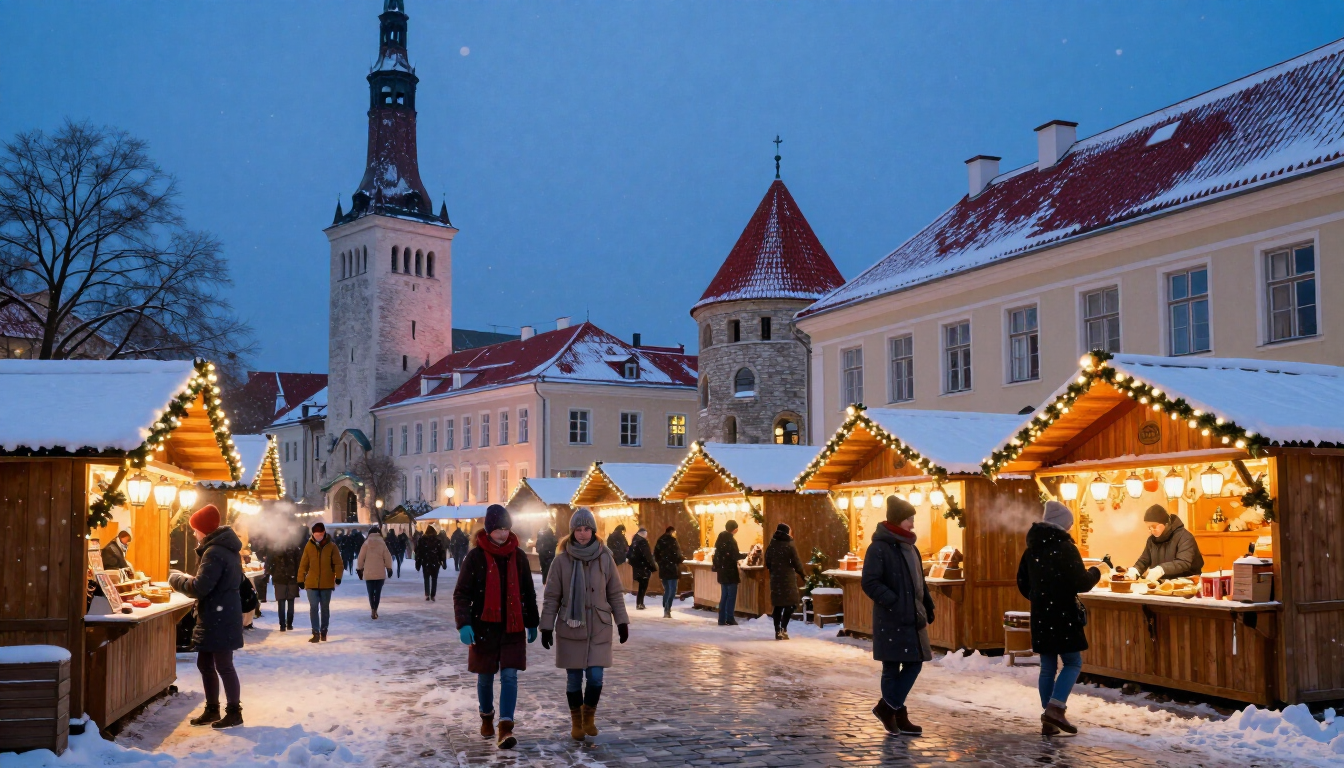
Tallinn offers the strongest fairytale-city experience on this list. Town Hall Square and medieval lanes look made for winter, while cafés, museums and indoor viewpoints help when it is bitterly cold. Its market is confirmed from 20 November 2026 to 6 January 2027, making Tallinn useful for Christmas markets after Christmas.
Best for: Couples, photographers and travellers prioritising wintry atmosphere.
Ideal length: Three nights.
Snow likelihood: Higher, but never certain.
Indicative total budget: £350–£500 per person.
Free or Low-cost highlight: Walking the Old Town walls and viewpoints.
Watch out for: Short daylight, ice and higher December hotel prices.
Jamie’s tip: Pay more for an Old Town or city-centre hotel if it avoids repeated taxi journeys in freezing weather.
Winter character: Tallinn in winter has a magical, storybook character defined by snow-dusted medieval architecture, quiet cobblestone streets, and a cozy, candlelit atmosphere
Typical UK journey: London and selected seasonal routes
Cheapest period: Mid-January to early February
Christmas-market timing: Confirmed into January
Vilnius, Lithuania
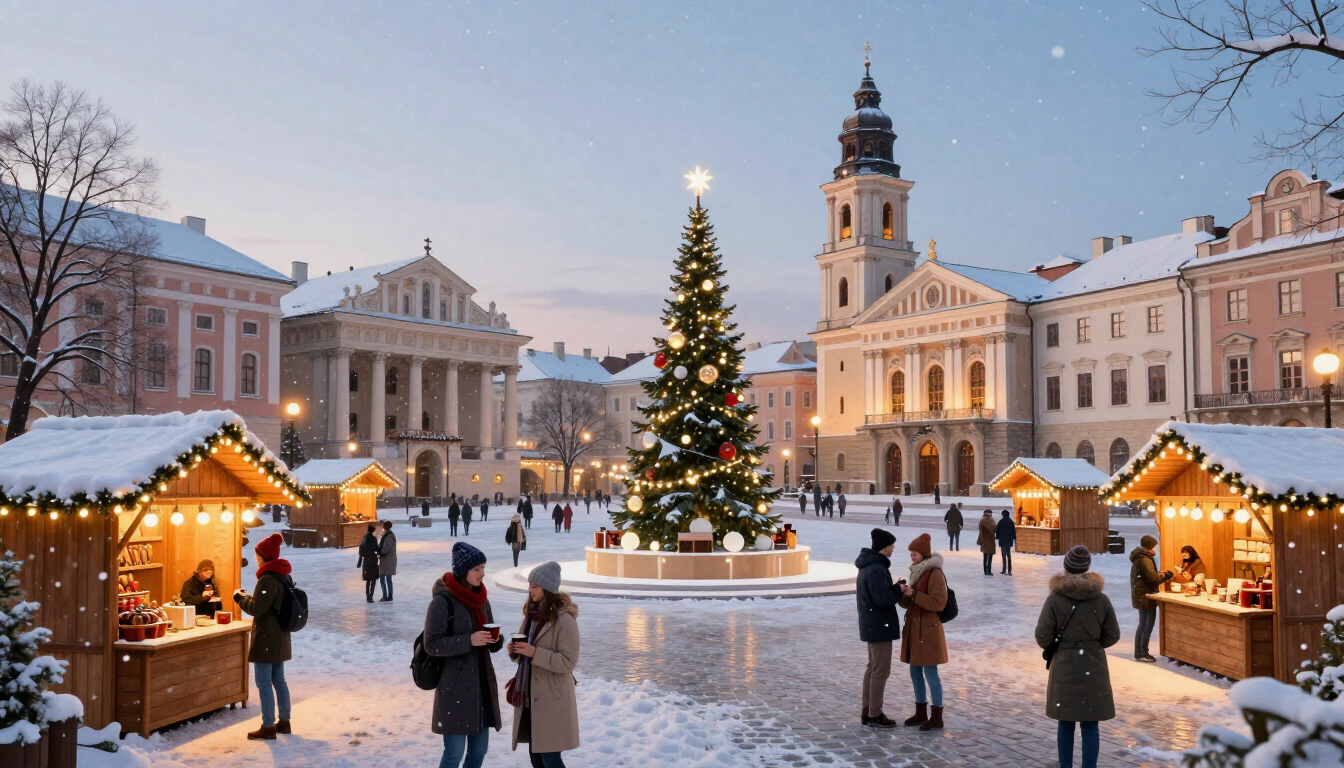
Vilnius combines a Baroque Old Town with a creative food scene and generally lower local costs than better-known festive capitals. Cathedral Square is the seasonal focus, while Užupis, churches and museums add substance. Official tourism information confirmed December 2026 Christmas activity, although the complete timetable was not yet final.
Best for: Food, culture and value-conscious couples or friends.
Ideal length: Three nights.
Snow likelihood: Higher.
Indicative total budget: £280–£420 per person.
Cheapest period: January.
Free or Low-cost highlight: Exploring the Old Town and Užupis on foot.
Watch out for: Some UK routes are seasonal.
Jamie’s tip: Compare hotel-and-flight packages with DIY prices; Vilnius can be excellent value when a well-timed direct route is operating.
Winter character: A magical, quiet fairy tale defined by snowy Baroque streets, soft festive lights, and a calm, cozy atmosphere.
Typical UK journey: London plus selected regional routes
Cheapest period: January
Christmas-market timing: Usually late November to late December
Krakow, Poland
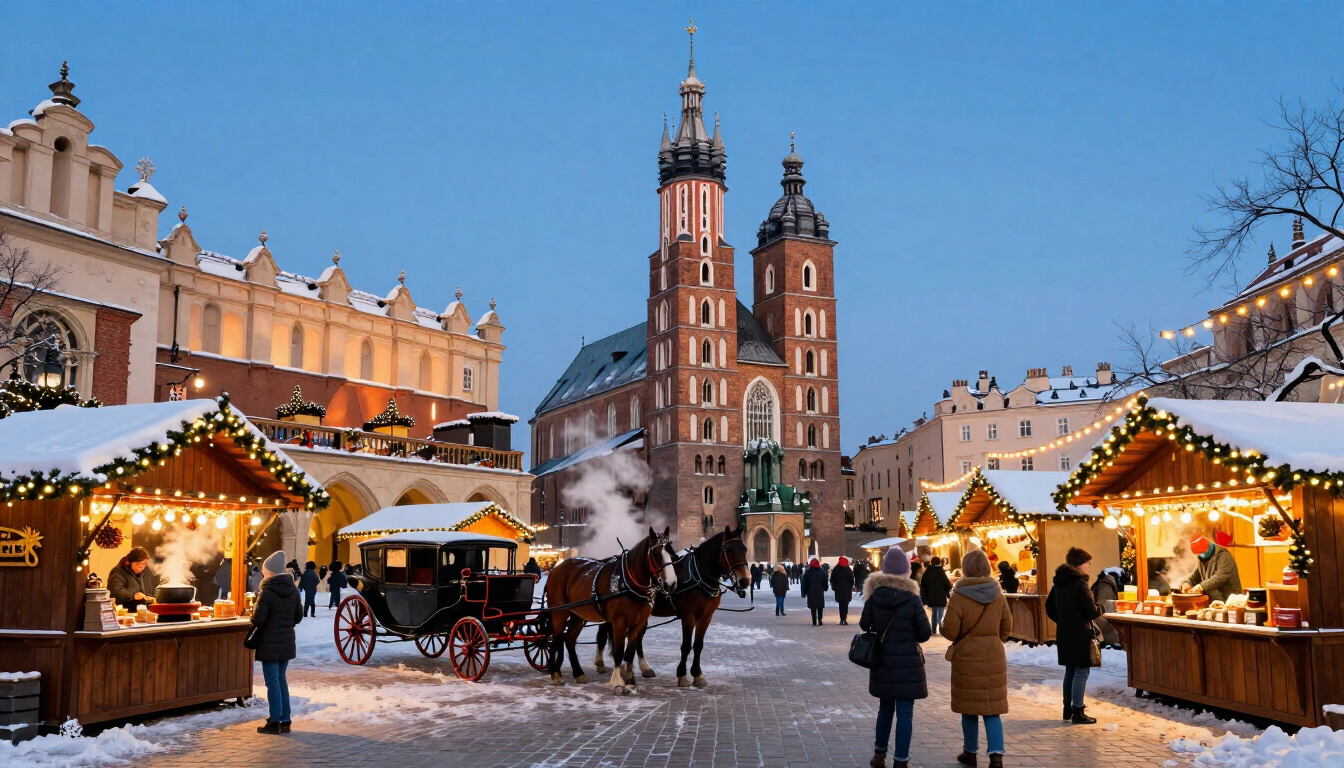
Krakow is an easy first winter city break. Its compact centre, Rynek Główny, Wawel Castle and restaurant scene suit three nights. Snow can be substantial, but rain is equally possible. The main market usually opens in late November and runs through much of December; confirm 2026 dates.
Best for: First-time city-break travellers, friends and couples.
Ideal length: Three nights.
Snow likelihood: Possible to higher.
Indicative total budget: £250–£400 per person.
Free or Low-cost highlight: The Old Town, Planty Park and Kazimierz streets.
Watch out for: Peak-market weekends and tours can increase the final spend.
Jamie’s tip: Stay within walking distance of the Old Town but not directly on the main square, where rooms and restaurants are usually dearer.
Winter character: Cinematic, medieval character defined by snowy cobblestones, glowing historic streetlights, and quiet frosty mornings
Typical UK journey: Broad UK access, varying by season
Cheapest period: Mid-January
Christmas-market timing: Usually late November into late December
Sibiu, Romania
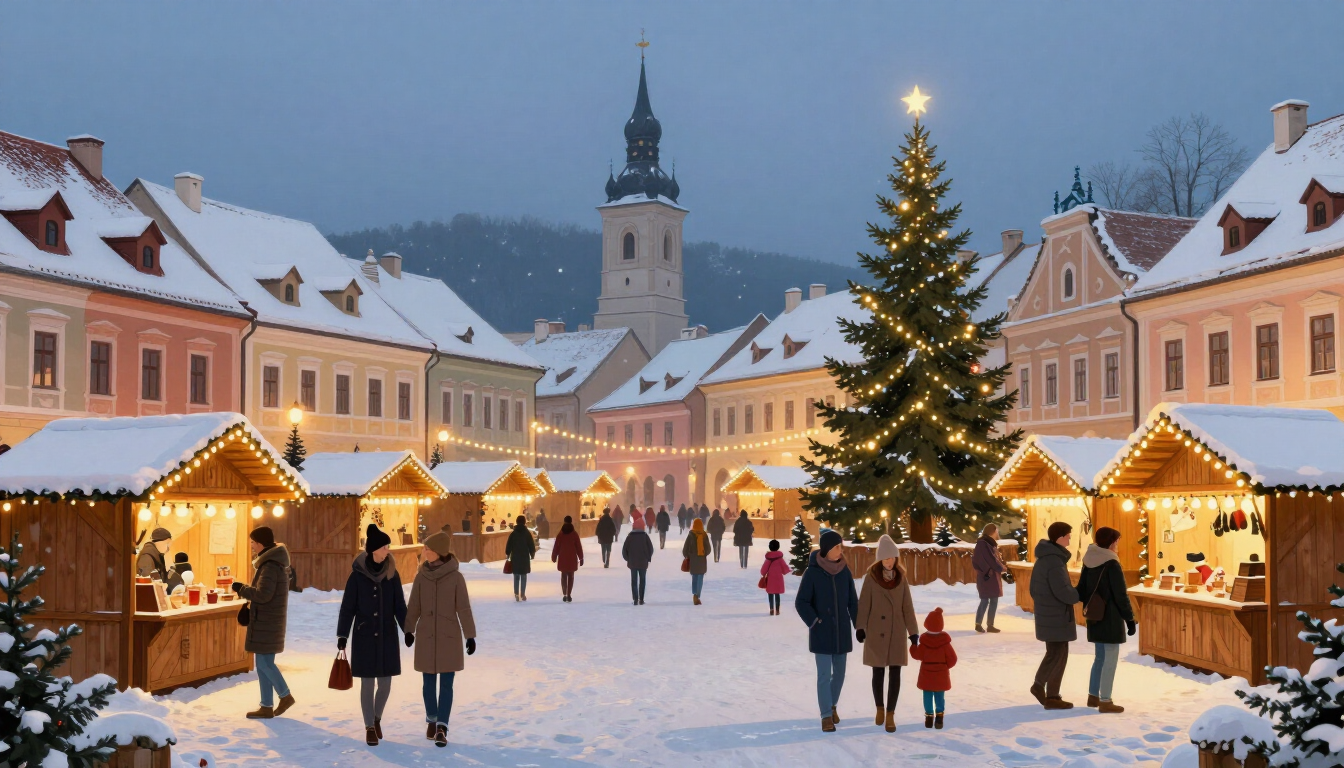
Sibiu is a smaller, more distinctive alternative to the best-known Central European markets. Its colourful Grand Square and compact centre suit a relaxed visit. The 2026 market is confirmed from 13 November 2026 to 3 January 2027.
Best for: Travellers seeking somewhere less obvious and strongly festive.
Ideal length: Three nights.
Snow likelihood: Higher.
Indicative total budget: £300–£450 per person.
Free or Low-cost highlight: The historic squares and Bridge of Lies.
Watch out for: Direct UK access is more limited than Krakow or Budapest.
Jamie’s tip: Do not judge the break on airfare alone; a convenient routing can be worth more than a very cheap flight with an awkward overnight connection.
Winter character: Medieval charm, snow-dusted terracotta roofs, and festive magic
Typical UK journey: Limited direct access; route choice matters
Cheapest period: Late November or January
Christmas-market timing: Confirmed into early January
Best Cheap Christmas-Market Breaks in Europe
The cheapest market is not automatically the best Christmas market weekend. Value also depends on setting, dates, journey time, hotel location and wet-weather options. For more inspiration, visit The Best Christmas Markets in Europe, The Ultimate Christmas Market Tour in Europe and How to Plan a Magical Christmas Market Tour in Europe.
Riga, Latvia
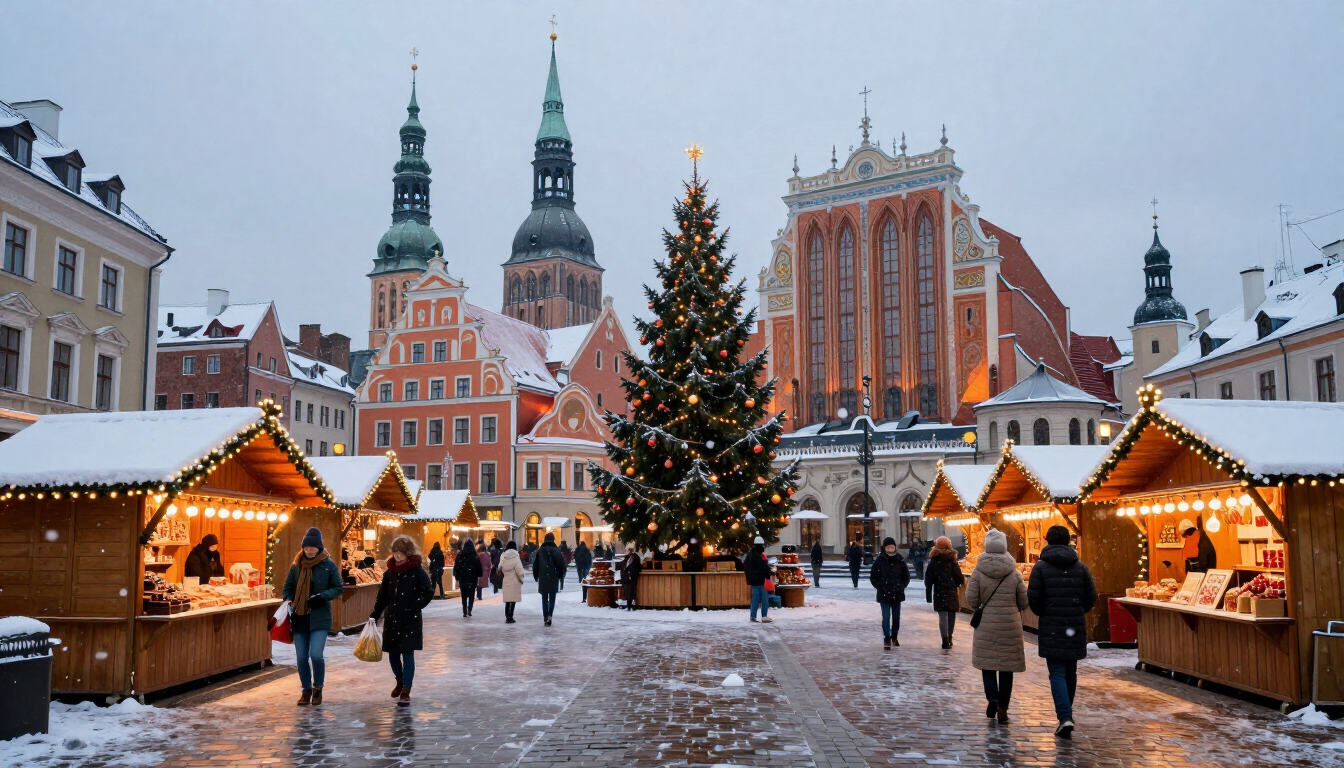
Riga offers a proper city break around the market. The Art Nouveau district, Central Market, Old Town and riverside add variety, while the 2026 market runs from 27 November to 3 January.
Best for: Architecture, food halls and a Baltic Christmas atmosphere.
Ideal length: Three nights.
Snow likelihood: Higher.
Indicative total budget: £280–£420 per person.
Alternative in poor weather: Riga Central Market or the Art Nouveau Museum.
Transfer practicality: Compare the airport-to-centre journey as part of the total price, particularly when choosing between late arrivals and more expensive daytime flights.
Watch out for: Baltic wind can make the temperature feel much lower.
Jamie’s tip: Choose a central hotel and treat the market as one part of the itinerary, not the entire reason to travel.
Winter character: Magical, snow-covered atmosphere defined by historic architecture, festive lights, and quiet, picturesque streets.
Typical UK journey: London and selected regional routes
Cheapest period: January
Christmas-market timing: Confirmed into January
Free or low-cost highlight: Walking the Old Town and Art Nouveau streets
Bratislava, Slovakia
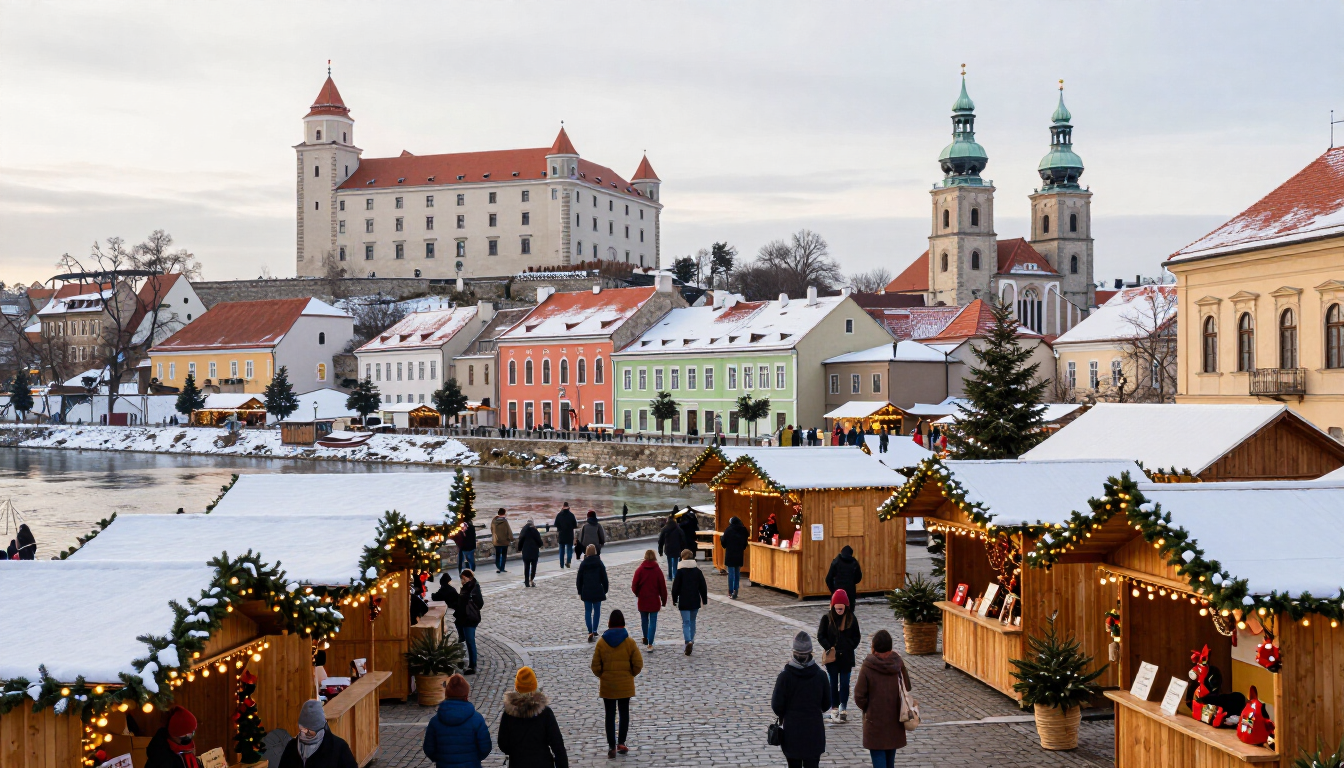
Bratislava is compact, walkable and often overlooked beside Vienna. Its Old Town, castle, Danube and market squares suit two nights. The latest full official programme ran from late November to 6 January, with Christmas closures; confirm the 2026 schedule.
Best for: Couples wanting an easy, low-stress weekend.
Ideal length: Two or three nights.
Snow likelihood: Possible.
Indicative total budget: £270–£420 per person.
Alternative in poor weather: Slovak National Gallery or a café-led Old Town afternoon.
Watch out for: A Vienna flight plus transfer may not be cheaper once every cost is included.
Jamie’s tip: Compare Bratislava-only prices with a twin-centre Bratislava and Vienna itinerary, but do not force two cities into two rushed nights.
Winter character: Calm, intimate, and fairy-tale character, defined by snowy cobblestones, cozy cafes, and traditional seasonal folklore.
Typical UK journey: Limited direct routes; Vienna can be an alternative
Cheapest period: January
Christmas-market timing: Often runs to early January
Free or low-cost highlight: Walking the Old Town and Art Nouveau streets
Gdansk, Poland
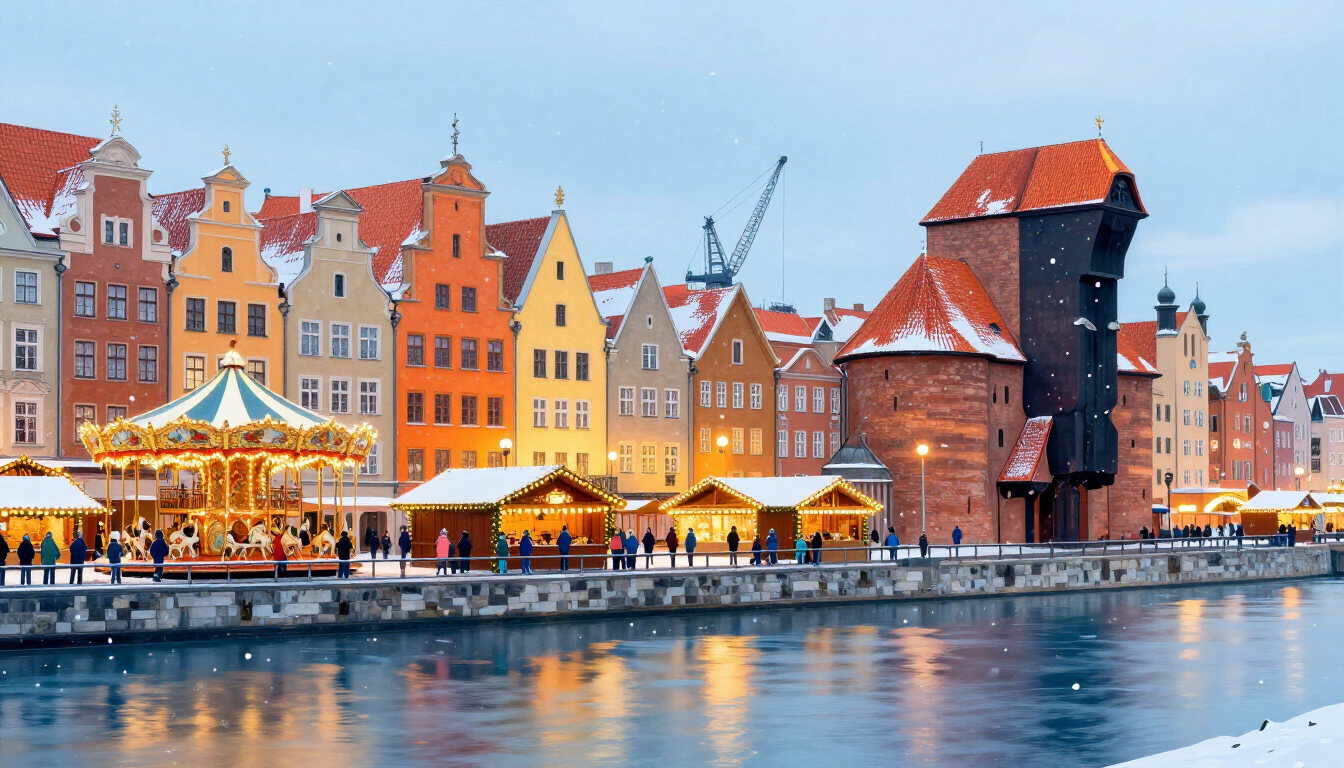
Gdansk’s colourful facades, riverside and maritime history make it one of the strongest best-value Christmas markets. The 2026 event runs from 20 November to 23 December, so it suits Advent rather than a post-Christmas market break.
Best for: Couples, friends and travellers who enjoy history.
Ideal length: Three nights.
Snow likelihood: Possible.
Indicative total budget: £260–£400 per person.
Alternative in poor weather: The European Solidarity Centre or Museum of the Second World War.
Transfer practicality: Check whether your flight time connects conveniently with public transport into central Gdansk before choosing the lowest fare.
Watch out for: The market closes before Christmas.
Jamie’s tip: Leave time for the waterfront and museums; Gdansk deserves more than an evening of stalls and mulled wine.
Winter character: Cozy, fairy-tale Baltic atmosphere, featuring snowy cobblestones, freezing winds, and festive holiday traditions
Typical UK journey: London and selected regional routes
Cheapest period: January or early December
Christmas-market timing: Confirmed until 23 December
Free or low-cost highlight: Walking Long Market and the historic waterfront
Budapest, Hungary
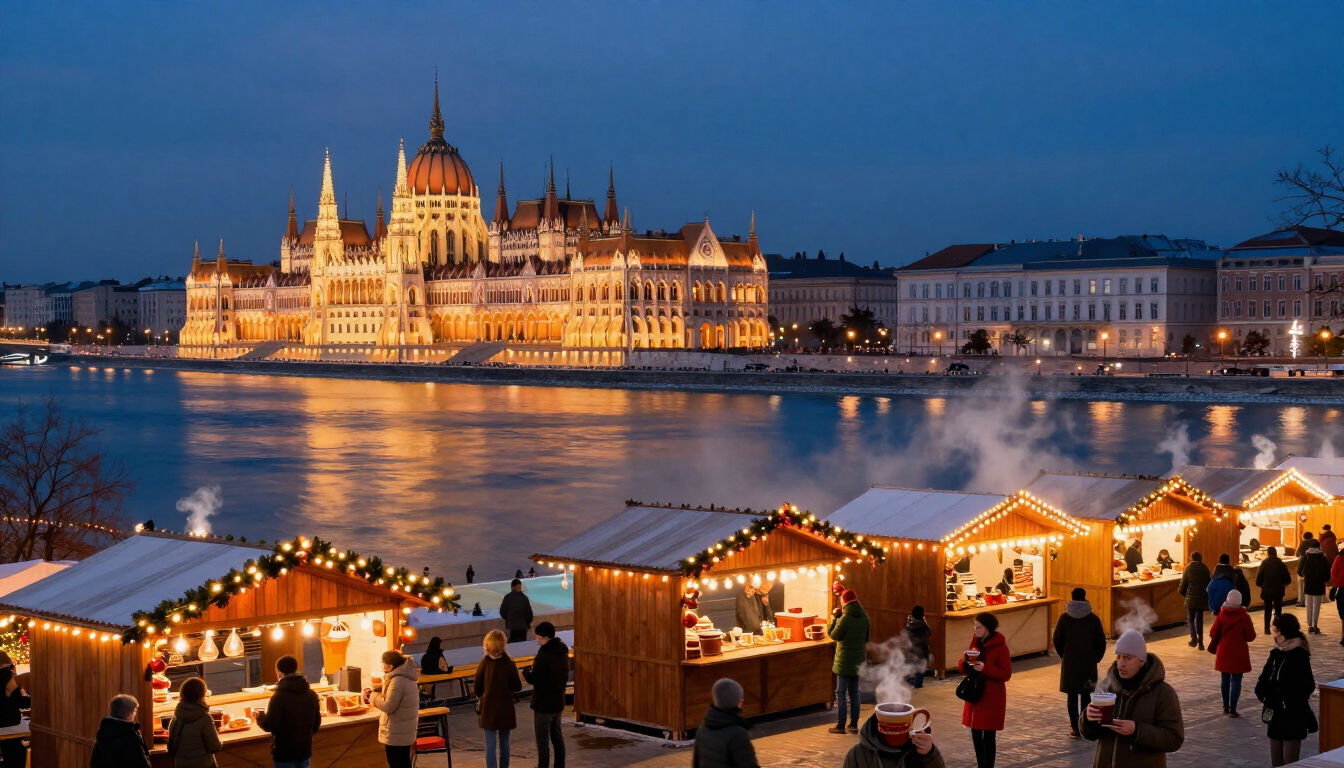
Budapest combines markets with thermal baths, river views, ruin bars, cafés and strong indoor attractions. Central festive food can be expensive, and December hotels cost more than January. Complete official 2026 dates were not yet released; the main markets traditionally run from mid-November into early January.
Best for: Food, nightlife, spa time and first-time visitors.
Ideal length: Three nights.
Snow likelihood: Possible.
Indicative total budget: £300–£480 per person.
Alternative in poor weather: Thermal baths, the Central Market Hall or museums.
Transfer practicality: Include the airport-to-city fare in the comparison and check how close the hotel is to useful metro, tram or bus connections.
Watch out for: Market spending can quickly exceed the daily budget.
Jamie’s tip: Price one thermal-bath visit in advance and eat a few streets away from the busiest festive squares.
Winter character: Magical, quiet, and cozy character defined by steam rising from outdoor thermal baths, glowing festive lights, and snow-draped historic architecture
Typical UK journey: Wide UK access
Cheapest period: Mid-January
Christmas-market timing: Usually mid-November into January
Free or low-cost highlight: Walking Long Market and the historic waterfront
Zagreb, Croatia
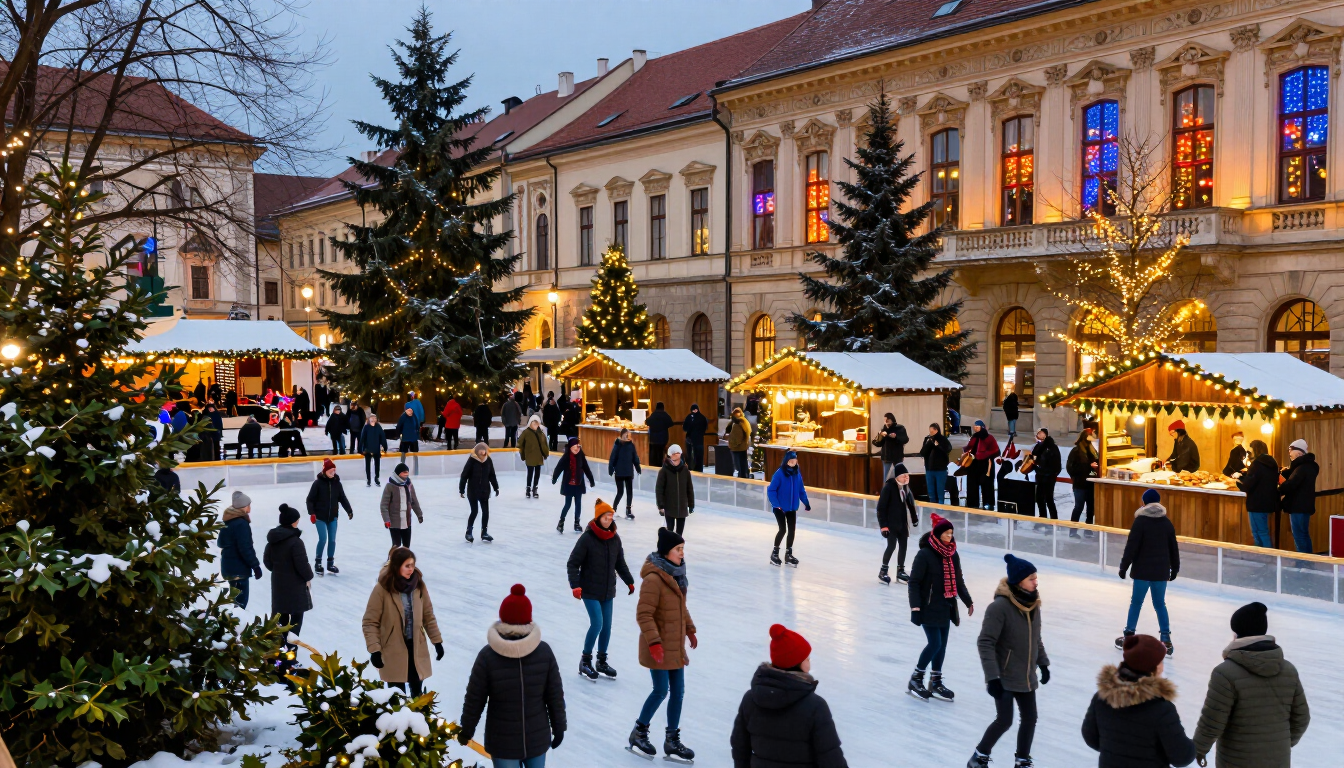
Advent Zagreb spreads across central squares and parks, with lights, food, music and events rather than one enclosed market. The official 2026 programme runs from 28 November 2026 to 7 January 2027.
Best for: Evening atmosphere, live events and a broader city-wide festival.
Ideal length: Three nights.
Snow likelihood: Possible, but not dependable.
Indicative total budget: £320–£480 per person.
Alternative in poor weather: Museums, cafés and the covered Dolac Market area.
Transfer practicality: Compare the cost and timing of the airport transfer, especially for evening arrivals or early departures.
Watch out for: Accommodation rises on the busiest Advent weekends.
Jamie’s tip: Late November can deliver the atmosphere with less price pressure than the final fortnight before Christmas.
Winter character: Cozy Central European fairy tale, defined by crisp continental cold, festive lights, and historical traditions.
Typical UK journey: London and some seasonal regional access
Cheapest period: Late November or January
Christmas-market timing: Confirmed into January
Free or low-cost highlight: Exploring the Upper Town and city-centre Advent displays
Lille, France

Lille is the most practical Eurostar city break here. Direct trains from London take about one hour and 22 minutes city centre to city centre, making two nights worthwhile. The tourism page lists the main market from 19 November to 30 December.
Best for: Travellers wanting a short, car-free festive break.
Ideal length: Two nights.
Snow likelihood: Low.
Indicative total budget: £300–£480 per person.
Alternative in poor weather: Palais des Beaux-Arts, restaurants and covered shopping streets.
Watch out for: Eurostar fares can rise sharply close to departure.
Jamie’s tip: Compare the rail fare with the complete cost of flying elsewhere; no airport transfer and a central arrival can make Lille better value than it first appears.
Winter character: Festive Flemish old-town charm, glowing squares and cosy cafés, with a milder, wetter winter feel than the snowier cities of Central and Eastern Europe.
Typical UK journey: Direct Eurostar from London
Cheapest period: Late November or January
Christmas-market timing: Listed from November to late December
Free or low-cost highlight: Grand Place, the Old Town and seasonal window displays
Are Prague and Vienna cheap Christmas-market breaks?
Prague and Vienna are iconic, but neither is an automatic budget choice. Festive demand pushes up central December hotels. Prague can still work midweek, in late November or January; Vienna is better treated as a quality-led break. Price-led travellers should compare Vilnius, Riga, Bratislava and Gdansk first.
How much should you budget at a Christmas market?
Market prices change each season and many stallholders do not publish menus far in advance, so historic prices should not be presented as current facts. As a practical planning allowance, include approximately £25–£35 per person for one market evening covering a main dish, a hot drink and a small purchase or sweet treat.
Check prices before ordering, particularly where cups require a refundable deposit. Eating every meal inside the main market can quickly undermine an otherwise cheap break. A good compromise is to enjoy one market meal and use neighbourhood cafés, bakeries and restaurants for the rest of the stay.
Best Cheap European City Breaks After Christmas
January and February often produce the strongest budget winter getaways in Europe. Choose cities with enough museums, restaurants and evening life to remain rewarding after decorations come down.
Berlin, Germany

Berlin works after Christmas because its appeal does not depend on festive stalls. Museums, galleries, neighbourhood food and nightlife remain strong throughout winter. Book it for culture, not promised snow.
Best for: Museums, nightlife and travellers who dislike a tightly scheduled itinerary.
Ideal length: Three nights.
Snow likelihood: Low to possible.
Indicative total budget: £320–£500 per person.
Cheapest period: Mid-January to early February.
Low-cost highlight: The East Side Gallery and neighbourhood walks.
Watch out for: Berlin is large, so daily public transport and long journey times matter.
Jamie’s tip: Stay near an S-Bahn or U-Bahn interchange rather than choosing a hotel solely because its nightly rate is lower.
Winter character: Cool, creative and culture-led, with museums, neighbourhood cafés, nightlife and bold city architecture replacing the traditional fairytale Christmas-market feel.
Typical UK journey: Extensive UK access
Cheapest period: Mid-January to early February
Christmas-market timing: Some markets continue into January
January atmosphere: Berlin remains lively after Christmas, with museums, galleries, cafés, restaurants and nightlife continuing throughout January. The city feels less festive but more local, cultural and relaxed once the seasonal crowds leave.
Short-day planning: Schedule outdoor sights such as the Brandenburg Gate, East Side Gallery and neighbourhood walks earlier in the day, then use late afternoon and evening for museums, food and entertainment.
Sofia, Bulgaria
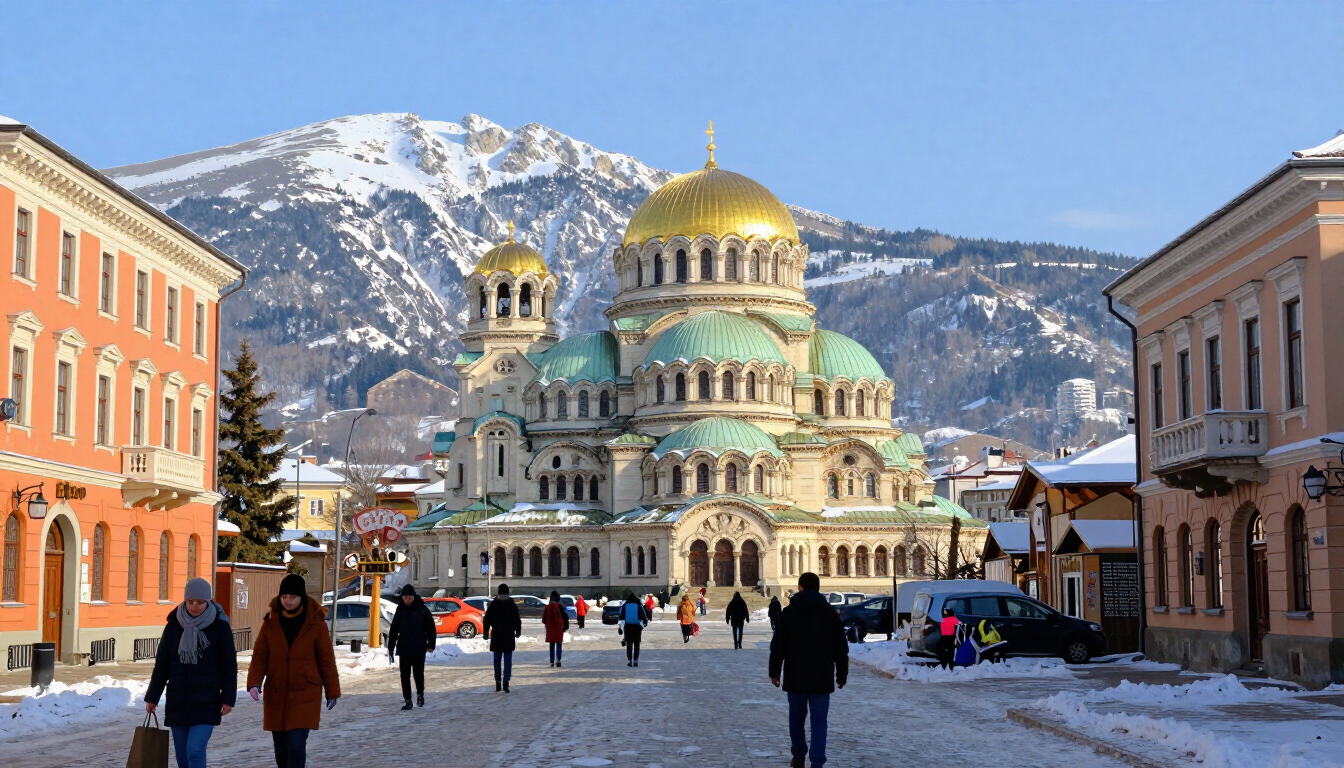
Sofia combines low meal and public-transport costs with churches, archaeology, museums and cafés. Vitosha Mountain may provide a snowy day trip, but Sofia itself is not a guaranteed snow city.
Best for: Low local spending, history and travellers happy to try somewhere different.
Ideal length: Three nights.
Snow likelihood: Possible in the city; stronger in the mountains.
Indicative total budget: £270–£420 per person.
Cheapest period: January.
Low-cost highlight: Alexander Nevsky Cathedral and central archaeological sights.
Watch out for: Mountain conditions and transport need separate checks.
Jamie’s tip: Build the break around Sofia first, then add Vitosha only if the weather and transport make it sensible.
Winter character: Crisp and atmospheric, combining historic streets and golden-domed landmarks with views towards snow-covered Vitosha Mountain and a more relaxed, local winter-city feel.
Typical UK journey: London and selected regional routes
Cheapest period: January
Christmas-market timing: Seasonal markets vary
January atmosphere: Sofia remains active after the festive season, with cafés, restaurants, museums and everyday city life continuing through January. It feels quieter and more local, while nearby Vitosha Mountain adds winter appeal when conditions are suitable.
Short-day planning: Visit outdoor landmarks and central streets during the brightest part of the day, leaving museums, churches, cafés and restaurants for late afternoon. Any Vitosha trip should begin early because daylight and mountain transport may be limited.
Also compare Sarajevo for history, cafés and mountain scenery, although UK access may be limited, and Bucharest for low-cost food, nightlife and museums. Prague becomes more attractive once festive hotel premiums ease.
Sarajevo and Bucharest: two more January options
Sarajevo suits travellers who value history, café culture and a compact centre. Its year-round cultural offer includes museums and winter events, but UK access can be less straightforward, so it only represents good value when the flight schedule is practical.
Bucharest is a stronger poor-weather option, with museums, major landmarks and enough indoor sightseeing to support a three-night city break in January or February. It can offer low local spending, but an indirect or badly timed journey may remove that advantage.
For either city, compare the complete journey, winter opening hours and the number of useful daylight hours. A destination should not be included solely because restaurant and hotel prices appear low.
Plan around shorter days and winter opening hours
Daylight can be limited during December and January, especially in the Baltic states. Put viewpoints, walking tours and outdoor districts earlier in the day, leaving museums, thermal baths, restaurants and performances for late afternoon.
Some attractions operate shorter winter hours or close on particular weekdays. Check the exact opening pattern before booking flights, particularly for a Sunday-to-Tuesday break, when a major museum’s normal closing day could remove one of the most useful indoor options.
Jamie Says:
"The most common mistake with a cheap winter break is choosing the lowest visible fare before pricing the rest of the trip. A more expensive flight can produce the cheaper holiday when it arrives centrally, includes useful baggage and gives you most of the first and final day. I would always compare the complete itinerary, not simply the first price shown on a flight-search screen."

How to Find Cheap Winter Breaks in Europe from the UK
Compare the complete cost
Add the fare, baggage, hotel, breakfast, airport transfer, local transport and planned experiences. A remote airport can add substantial cost and remove half a day. A city-centre arrival may justify a higher ticket price.
Check London and regional UK airports
Regional UK airports often serve Poland, Hungary, the Baltics, Romania and Bulgaria, but some routes operate only on certain days. Compare the door-to-door cost, including parking, rail, fuel or an airport hotel.
Protect the useful hours of the trip
For a two-night city break, flight times matter almost as much as price. An early outbound and late return can create nearly three usable days; poor timings may leave only one. That is how cheap winter holidays in Europe become poor value.
Be realistic about hand-luggage winter packing
Boots and coats take space. Wear bulky items, pack repeatable layers and check exact cabin-bag dimensions. Two travellers sharing one checked bag may pay less than buying two larger cabin bags. Hand-luggage winter packing must not leave you without suitable clothing.
Choose package versus DIY on value, not habit
DIY booking can work well when direct flights, a suitable hotel and simple transfers line up at the right price. A package may provide a better total price, more suitable flight times, included baggage, transfers or additional booking support.
Where Jamie Wake Travel sells an ATOL-protected flight-inclusive package, customers receive an ATOL Certificate showing exactly what is financially protected. ATOL protection does not apply to every holiday or travel service and is not a replacement for travel insurance. Jamie Wake Travel also operates through Protected Trust Services, using trust-account arrangements for applicable customer payments. The protection applying to each booking is explained before purchase.
Check entry requirements and insurance
Check current FCDO advice, passport validity rules and entry requirements for the country you plan to visit. The EU Entry/Exit System is already operating for most British visitors entering the Schengen area. ETIAS is not yet operational and is currently expected to begin in the last quarter of 2026. No application is required until the European Union confirms its official launch.
Travel insurance should be arranged from the time of booking, not the day before departure. Confirm that winter weather disruption, medical needs and any planned mountain activities are covered.
Example Budget for a Two-Night and Three-Night Break
These planning examples are not live quotations. They assume two adults sharing, one small cabin bag each, a central three-star hotel and modest spending.
| Cost | Two-night break per person | Three-night break per person |
|---|---|---|
| Return travel from the UK | £80 | £100 |
| Cabin baggage or shared luggage allowance | £25 | £25 |
| Accommodation, based on two sharing | £90 | £135 |
| Airport or station transfers | £20 | £20 |
| Local transport | £10 | £15 |
| Meals and non-alcoholic drinks | £70 | £105 |
| One paid attraction or thermal-bath visit | £20 | £25 |
| Festive-market spending allowance | £25 | £30 |
| Illustrative total | £340 | £455 |
A quiet midweek two-night break may fall below £300 per person, while a popular December weekend can exceed £500. Use the same method for every destination: a £30 airfare saving is meaningless if transfers add £45, while a central hotel may justify a higher rate by removing taxis.
For a Christmas market tour visiting more than one city, calculate intercity transport and check-in time as well as nights away. The Ultimate Christmas Market Tour in Europe and How to Plan a Magical Christmas Market Tour in Europe should help readers decide when a multi-centre route adds value and when it simply creates unnecessary movement.
Frequently Asked Questions
Where is the cheapest winter city break in Europe from the UK?
There is no single cheapest destination for every UK traveller because departure airport, dates and baggage can change the result. Krakow, Gdansk, Vilnius, Riga, Sofia and Bratislava frequently offer a strong combination of affordable hotels, reasonable meal costs and low-cost public transport. Compare the total trip cost rather than the fare alone. A £30 flight to a remote airport can be worse value than a £70 flight arriving centrally. For the lowest prices, check midweek dates from mid-January to early February and compare at least two practical UK departure airports.
Which affordable European city is most likely to have snow?
Tallinn, Vilnius, Riga and Sibiu have a stronger chance of wintry conditions than milder western cities, while Krakow can also receive snow. However, no city-break destination can promise snow on specific dates. Temperatures may sit below freezing without snowfall, or a mild spell may bring rain. Choose a destination you would still enjoy without white streets, with museums, cafés and indoor attractions for poor weather. Travellers who need dependable snow should consider a mountain or ski destination rather than treating a European capital as a substitute.
Are Christmas-market breaks cheaper in November or December?
Late November is often cheaper than the final two weekends before Christmas, provided the chosen market has already opened. Early December can also offer a good balance of full festive atmosphere and manageable hotel prices. Costs usually rise as Christmas approaches because weekend demand is high and convenient flights sell first. Check official European Christmas market dates before booking, as opening periods vary. Some markets begin in mid-November, while others do not open until the final weekend of the month. A cheaper November trip has little value if the event you want is not operating.
How much should a three-night European winter break cost?
A realistic planning range is around £300–£500 per person for three nights, based on two adults sharing a central three-star hotel. That should include return travel, modest baggage, transfers, local transport, ordinary meals and one paid attraction. Baltic and Central European cities may fall near the lower end outside peak dates; iconic Christmas-market weekends can exceed the upper end. Always state what a price includes. A low headline package without baggage, transfers or a suitable hotel location cannot be compared fairly with a more complete option.
Which winter destinations have direct flights from regional UK airports?
Routes change by season, but regional UK airports often have direct services to cities in Poland, Hungary, Romania, Bulgaria and the Baltic states. Krakow, Gdansk and Budapest commonly offer some of the broadest choices, while Sibiu, Bratislava or Sarajevo may be more limited. Check operating days as well as the route itself: a twice-weekly flight can force a longer stay than planned. Add parking, rail travel and airport-hotel costs before choosing. The best departure point is the one with the lowest practical door-to-door cost and useful flight times.
Is Prague cheap at Christmas?
Prague can be affordable compared with some Western European capitals, but it is not automatically a cheap Christmas-market break. Demand around Old Town Square and Wenceslas Square pushes up central hotel prices, especially on December weekends. Food and drink in the busiest tourist areas can also cost far more than in local neighbourhoods. Prague offers better value in late November, midweek or after Christmas, when accommodation may ease. Compare it with Vilnius, Riga, Bratislava and Gdansk before booking. Choose Prague for its architecture and atmosphere, not because every festive date will be inexpensive.
Is a package cheaper than booking flights and hotel separately?
Either can be cheaper, so compare like with like. A DIY booking may win when low-cost flights, a refundable hotel and simple airport transport line up well. A package may include better baggage, useful flight times, transfers or financial protection that is not reflected in the first visible price. Check the same room type, board basis, luggage and cancellation terms. For a flight-inclusive package, confirm the ATOL protection shown on the certificate. Remember that travel insurance remains necessary because ATOL and insurance protect against different risks.
What should I pack for a hand-luggage-only winter city break?
Wear your heaviest coat and footwear while travelling, then pack warm layers that can be repeated. A thermal base layer, two tops, one mid-layer, spare underwear, gloves, hat, scarf and weather-resistant shoes are usually more useful than several bulky outfits. Add lip balm, moisturiser, a compact umbrella and any medication in your cabin bag. Check the airline’s dimensions rather than relying on the phrase “hand luggage”. For a very cold Baltic break, paying for one shared larger bag may be better than compromising on suitable clothing.
Find the Right Winter Break
The best cheap winter breaks in Europe depend on your priority. Choose Tallinn or Sibiu for wintry scenery; Vilnius, Riga, Bratislava or Gdansk for festive value; Budapest for food, baths and nightlife; Lille for Eurostar; or Berlin and Sofia after Christmas.
Compare total cost, useful hours, hotel location, market dates, snow likelihood and wet-weather appeal. That is the difference between a cheap booking and a genuinely good-value break.
Explore more City Breaks, read The Best Christmas Markets in Europe, or speak to Jamie Wake Travel for help comparing a protected package with a tailor-made itinerary from your preferred UK airport.
About Jamie Wake
Jamie Wake is the founder of Jamie Wake Travel, helping UK travellers plan holidays with personal service, honest advice and careful attention to what matters to them.
Jamie combines first-hand travel experience with professional travel-industry knowledge and detailed destination and supplier research. His work covers package holidays, tailor-made journeys, multi-centre itineraries, cruises, wildlife holidays, luxury travel, inclusive travel and specialist Maldives holidays.
Through Jamie Wake Travel, Jamie shares practical guidance designed to help travellers compare their options, understand the details behind a holiday and make more confident decisions—not simply choose the first or cheapest offer they see.
Research and update policy
This guide was researched and updated on 31 July 2026. Christmas-market dates were checked against official destination or event websites where 2026 programmes were available. Transport information was checked against current rail, airport or route information, while entry and financial-protection guidance was checked against official UK and European sources. Prices and schedules can change, so all dates, routes and costs should be rechecked before booking.